

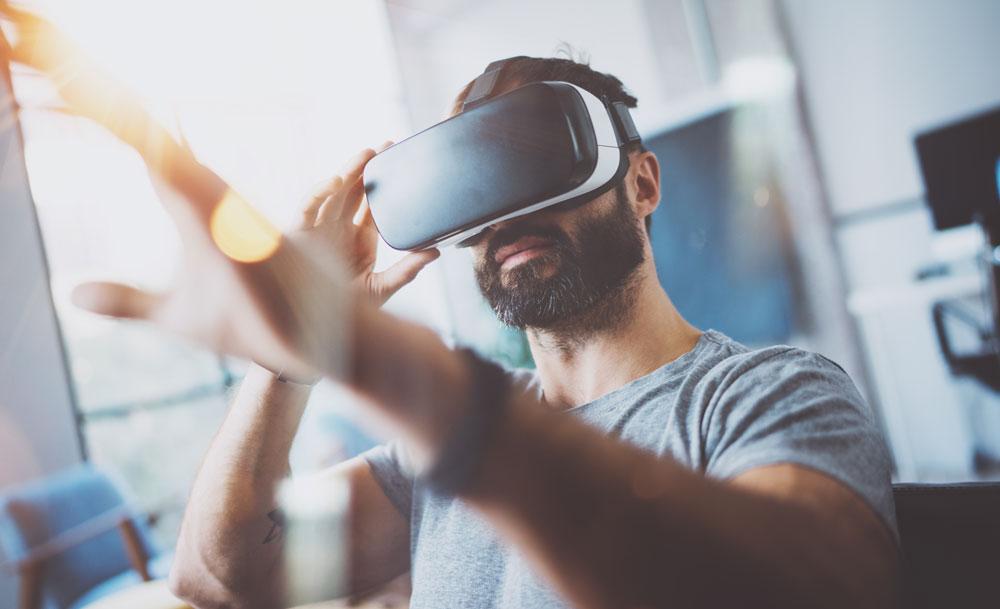
The integration of virtual reality (VR) into mental health care is not only advancing the field but also challenging our understanding of its therapeutic possibilities. What was once seen as a tool for gaming has now entered the mental health landscape, offering innovative treatments for conditions such as phobias, PTSD and general mental health support.
However, amid the excitement, it’s crucial to examine both its promise and its pitfalls. Here, Andrew Green, Psychology Lecturer at Arden University, unpacks the science behind VR’s application in mental health treatment, while addressing the complexities of its ethical and emotional dimensions.
How VR is changing mental health treatment
VR’s ability to immerse users in controlled, interactive environments makes it uniquely suited for therapeutic applications. By simulating high-fidelity scenarios, tailored to individual needs, VR offers mental health professionals a powerful tool to address specific challenges.
Systematic desensitisation, a well-established psychological intervention for phobias, has seen a revolutionary enhancement with VR. For instance, an individual with a severe fear of flying can practise exposure therapy by stepping onto virtual aeroplanes, without leaving the therapist’s office. These controlled environments replicate real-world stimuli, allowing individuals to experience and process their fears safely.
Interestingly, a 2023 meta-analysis found VR to be more effective than passive controls in reducing anxiety, especially for phobias, social anxiety, panic disorders and agoraphobia. But the true advantage lies in the precision of VR environments. Using VR, therapists can modify scenarios, step-by-step, helping patients to build tolerance gradually. This approach not only reduces the logistical barriers of accessing treatment, but it also ensures consistent, repeatable exposure, which might not always be possible in real-world settings.
For military veterans and trauma survivors, reliving distressing events is often part of therapeutic interventions, like Prolonged Exposure Therapy. VR enables such individuals to process memories within a safe and moderated simulation.
By interacting with these events in a carefully prepared and controlled environment using VR, those living with PTSD can work through emotions and begin to reframe their triggers. In fact, a meta-review of VR exposure therapy for PTSD showed lower attrition, and often superior outcomes, compared to traditional imaginal exposure. On top of this, another study showed that combining VR exposure with low-intensity electrical brain stimulation, over six 25-minute sessions, markedly reduced symptoms, in comparison to 12 weeks of standard therapy. It also sustained gains post-treatment.
One remarkable aspect of VR in PTSD treatment is its adaptability. Scenarios can be adjusted in real-time by therapists, creating a unique pathway for each patient’s needs, while maintaining full control over the pace and intensity of exposure.
Accessibility
For those unable to access in-person therapy, due to geographical, financial or societal barriers, VR brings treatment closer to home… literally. VR platforms now host virtual therapy sessions, group support meetings and mindfulness exercises. Patients can interact with therapists or peers in highly personalised spaces, bridging gaps in accessibility and reducing the stigma of seeking mental health support. It’s also a cost-effective solution for providing complementary mental health care in a consistent, standardised and precise manner.
VR can also ensure mental health resources reach rural communities, individuals with mobility challenges and underserved populations. For example, it can be an innovative approach to treating agoraphobia, an anxiety disorder which can result in individuals experiencing difficulty leaving the house. VR can let us take therapy to the client, if the client can’t get to therapy. It’s a frontier where technology closes gaps that traditional methods may struggle to.
However, while the potential of VR in mental health care is profound, its adoption raises pressing ethical and emotional concerns, which shouldn’t be overlooked.
The risks of technology dependency
One critical issue is the risk of over-reliance on VR solutions. If individuals come to prefer virtual environments over addressing real-life interactions, therapy may inadvertently encourage avoidance. Mental health interventions are most successful when they empower individuals to reintegrate into their daily lives, not retreat into digital realms.
Therapists must strike a delicate balance, ensuring VR complements existing treatments, rather than becoming a substitute for real-world experiences. This requires careful planning and ongoing monitoring to ensure therapeutic gains transfer back into a patient’s day-to-day life.
The immersive nature of VR can also blur the boundaries between reality and simulation. For individuals prone to emotional disconnection, for instance, or for those with dissociative tendencies, these simulations may exacerbate feelings of detachment. There’s also a broader societal risk of individuals retreating into virtual worlds as an escape, undermining real-life human connections.
To mitigate these risks, therapeutic frameworks must include debriefing processes. Patients need guided support to reconcile their VR experiences with their real-world contexts.
Finally, the long-term effects of prolonged VR use remain largely unexplored. The technology itself is still in its infancy, meaning psychologists and researchers lack definitive data about potential neurological or emotional consequences. Could VR heighten susceptibility to conditions like dissociation or distort one’s sense of self? Can overuse of VR lead to neglect of real-world issues and responsibilities? Does the superrealism of VR make it hard for children or vulnerable adults to differentiate between the real and virtual worlds? If the virtual world is more appealing, which will they prioritise? These are critical questions, which require ongoing study.
Any widespread adoption of VR must be partnered with rigorous research into its psychological impact. Ethical usage depends not only on regulation but also on maintaining transparency about what we understand about its effects.
Amid the excitement surrounding VR, it’s easy to get swept up in speculative claims. However, as with any major advancement, the technology’s true potential lies in a thoughtful, evidence-based approach. Rigorous clinical trials, interdisciplinary collaboration and ongoing feedback loops between technologists and psychologists will shape the responsible integration of VR into mental health care.
For therapists and patients alike, VR should be viewed as a tool; not a panacea. VR works best when combined with traditional techniques, acting as an enhancer, rather than a replacement. By setting realistic expectations and prioritising patient wellbeing, we can harness VR’s potential, without falling prey to its challenges.
For policymakers, psychologists and developers, the task ahead is to ensure VR is integrated responsibly, ethically and with patient-centred care at its core. Only then can we transform VR’s promise into a sustainable reality for mental health treatment.